Since the launch of OneGeo Chat, our RAG chatbot dedicated to exploring geographic data, the solution has continued to evolve. After several iterations on the RAG architecture, the interface, and the integration with OneGeo Suite, here is v2.2: a complete interface overhaul, new geographic search features, and administration tools built directly into the application. Here’s … Read more

Uncategorized
After learning how to create your first neural network in the article My First Neural Network and studying the theory of model optimization in the article Simple Neural Network Optimization, it’s now time to practice effectively training a neural network! 🚀 To do this, we will revisit the model creation from the article My First … Read more
Chatbots are everywhere, but OneGeo Chat is not limited to generic answers: it leverages your datasets! Thanks to the RAG (Retrieval Augmented Generation) architecture, it queries and cross-references available information to provide accurate and contextualized answers tailored to your field. 🔍 This article is for those who want to go further and discover what happens … Read more
While the Python standard library can be considered stable, the same cannot be said for the typing component, which is currently in a state of rapid development. As a reminder, typing in Python is optional, which is perfectly fine for small projects and scripts. However, as soon as a project grows in scale, typing function … Read more
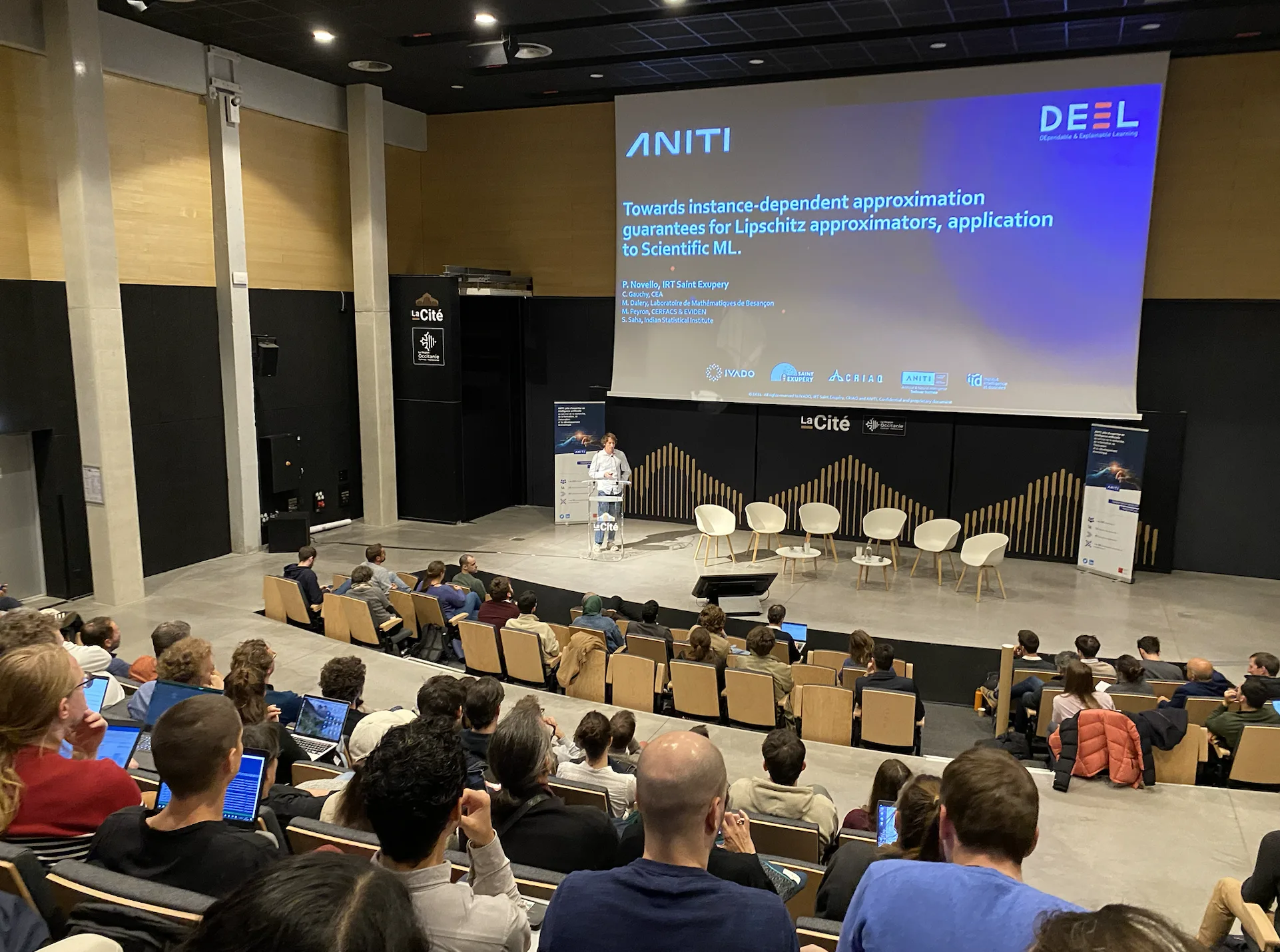
On November 25 and 26, I had the opportunity to participate in the ANITI Days, organized at the Cité de Montaudran in Toulouse. These days dedicated to artificial intelligence are orchestrated by the ANITI (Artificial and Natural Intelligence Toulouse Institute), a leading research institute in Occitanie specializing in artificial intelligence. Enriching Discussions on Retrieval-Augmented Generation … Read more
Python, the dynamic programming language created by Guido van Rossum, has become one of the most popular tools for developers thanks to its simplicity, flexibility, and power. At Neogeo, we use it to develop the backend of our applications, write administration scripts, and do data science. To mark the release of Python 3.13 on October … Read more
Now that we have learned how to train a neural network (a model) and how to retrieve/create training data, let us review the theory behind optimizing the training of our model. Training a model is an iterative process: at each iteration, the model estimates the output, computes the error in its estimate (loss), collects … Read more
What is a tile? To display spatial data on a map, there are different data formats, including the vector tile, which brings new possibilities for displaying data (fast data access, easy style modification, direct user interaction with objects). Indeed, a digital map can theoretically display data at any scale and in any location, but this … Read more
To better understand the article on neural networks, this week we invite you to code a small neural network to gain a clearer understanding of what weights, feed forward, and other concepts introduced in the previous article are. We will create a single-neuron neural network and attempt to make it predict data points located on … Read more
Furthermore, these neural networks are also used to classify data or perform forecasts. They are widely utilized in the fields of natural language processing and computer vision, particularly in robotics. Neural networks are therefore present all around us. However, you may not know what lies behind these networks, which can seem very obscure and complex. … Read more